

Responsible gambling without preaching: What can affiliates do?
15 APR 2026

In a sector where everyone is chasing profits, it’s easy to treat responsible gambling messaging as a tick-box formality. But done well, it can help affiliates build a more credible brand as well as convey that they are here for the long haul. We speak to two affiliates and an iGaming UX expert about why conventional messaging can be counterproductive and how to make it better resonate with players.
One of the most pressing tasks in the gaming industry, responsible gambling messaging has long carried a reputation for being performative, certainly among those not working in or opposed to the sector. From the litany of regulator logos to the “gambling can be addictive, play responsibly” line buried in the smallest font at the bottom of a casino site, it’s little surprise that many see these disclaimers as a box-ticking exercise rather than a genuine safeguard.
At worst, those messages can even backfire. According to a GambleAware study in 2025, operators’ safer gambling videos were found to create a false notion of “harmless fun”, especially among younger audiences and those with existing problems. As a key channel for player acquisition and education, affiliates are often the starting point of a bettor’s journey. If first impressions matter, what can this sector do better in this balancing act to steer audiences in the right direction?
Fatigue and stigma
To design the best affiliate framework for responsible gambling messages, it’s important to understand where players’ stonewall reaction comes from.
The trick is to find the balance, so the responsible gambling messages are part of the flow in a natural way and have a logic, without overusing them
Jani Peteri

As Jani Peteri (above), senior UX expert and former creative director at Raketech, puts it, this fatigue “comes from repetition without any meaning”. When players are repeatedly exposed to the same admonition, stripped of any variation, the message soon becomes pointless. Contrary to common belief, Peteri adds that pop-ups and alerts are more likely to irk players than do any good.
“Bad UX practices like poor hierarchy or pop-ups, notifications, anything that disrupts the flow of the user journey add friction,” he explains. “The trick is to find the balance, so the responsible gambling messages are part of the flow in a natural way and have a logic, without overusing them.”
Tone also plays a role. Frank Op de Woerd (below), CEO of the leading Netherlands affiliate CasinoNieuws.nl among others, points out that users tend to respond poorly to messaging that feels judgemental or out of touch with their intent. Those who search for terms like “online casino no GamStop”, he argues, already know what they are looking for, so confronting them with generic warnings can feel counterproductive. A more personal approach – acknowledging their motivations while gently highlighting risks – may be more effective.
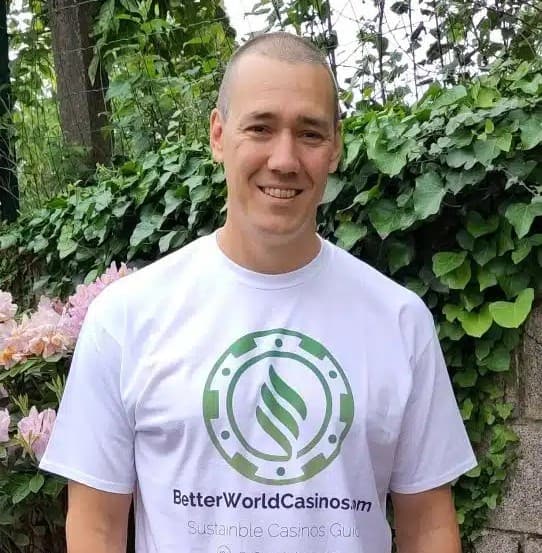
But given the nature of gambling addiction, Floris Assies, founder of BetterWorldCasinos.com, which reviews casinos based on their offerings alongside business ethics, observes that players “don’t like to be reminded” about responsible gambling, making engagement an ongoing challenge.

We wanted to dress up the website as an illegal affiliate, so users would spend longer on the page. Google would think, alright, this page is giving answers to someone looking for that specific topic
Frank Op de Woerd
Fake it till you make it
Among all the responsible gambling solutions, Woerd might have the most outlandish one. When the iGaming market opened in the Netherlands in 2021, illegal operators soon regained market share as channelisation rates declined. More people started googling for casinos not on CRUKS, the country’s self-exclusion system, and some affiliates began targeting related keywords, creating both a commercial threat and a consumer risk.
Instead of seething in the background, Woerd and his team decided to fight back. But they quickly realised that simply warning users wasn’t likely to work.
“If we were just to present a website with information like ‘hey, you shouldn’t be doing this, it’s dangerous’, people are going to instantly click away. Google will also see that as: oh, that website isn’t meeting their expectations,” Woerd explains. “We wanted to dress up the website as an illegal affiliate, so users would spend longer on the page. Google would think, alright, this page is giving answers to someone looking for that specific topic.”
With that in mind, Woerd bought two sites, casinozondercruks.nl (Casino without CRUKS) and casinozondervergunning.nl (unlicensed casinos), to mimic high-converting affiliate pages. Drawing on industry norms, the team incorporated familiar elements like bonus offers and crypto payment options to create authentic-looking pages.
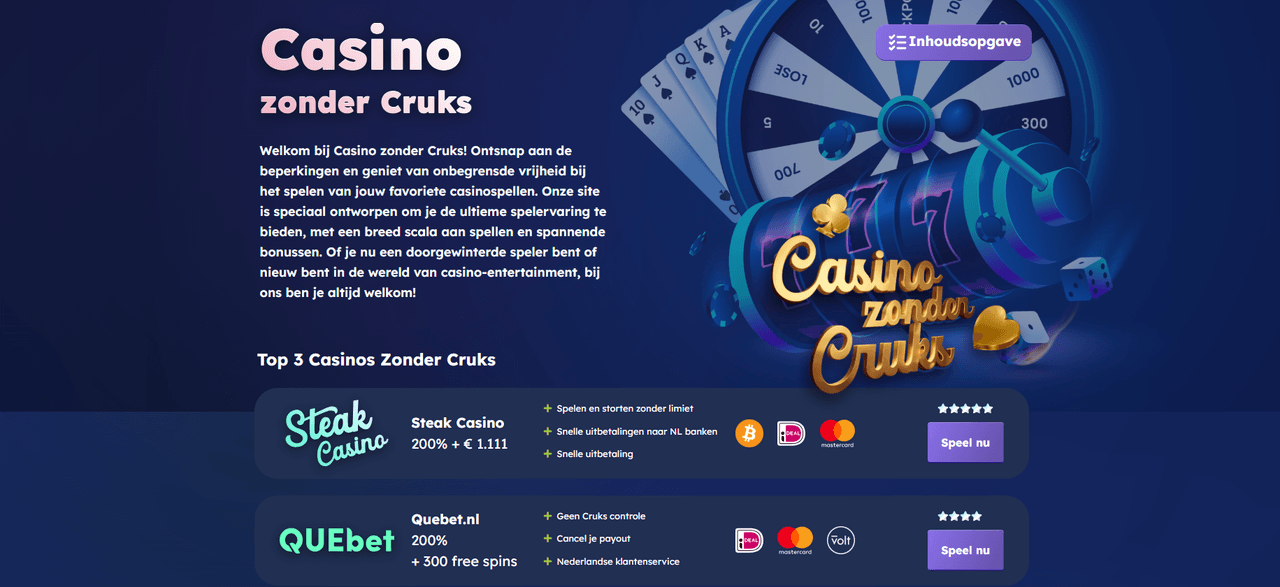
Screenshot of casinozondercruks.nl
“We have brands like Steak Casino, QUEbet and 7xbet, all inspired by well-known names in the industry. We also added the iDEAL logo, which is the most popular deposit method in the Netherlands,” Woerd says. But rather than directing users to offshore operators, the sites introduce them to a video from Feite Hofman, president of Gamblers Anonymous in the Netherlands, about his 23-year struggle with gambling addiction, and suggest self-exclusion tools like BetBlocker and GamBan.
The reception has been largely positive, having received endorsement from the regulator Kansspelautoriteit and nomination for Safer Gambling Initiative of the Year at the 2025 iGBA Awards. Although performance in search rankings has fluctuated, Woerd measures success differently: “If I saved someone from losing money that was reserved for Christmas presents for their kids, it’s already a win for me. It cost a lot of money to launch these two websites, but it’s all worth it if we save just one person from falling into the trap.”
It cost a lot of money to launch these two websites but if I saved someone from losing money that was reserved for Christmas presents for their kids, it’s already a win for me
Frank Op de Woerd
An integrated user flow
For day-to-day affiliate sites, though, the solution isn’t reinventing the brand, but embedding responsible gambling into the user journey. Peteri believes the first step is abandoning the idea that visibility alone drives impact.
“I don’t believe in big banners. I think people don’t care,” he says. “It’s like smoking. You can put a big fat warning sign on the package with terrible images like rotten teeth or lungs, but people still smoke. If a site feels trustworthy and genuinely encourages people to play responsibly, then it should be part of the user flow. But more often than not, it’s just ‘we have to put it there because we have to’.”
A good way to achieve that, Assies (below) suggests, is by adding casinos’ safety ratings into reviews. By assigning visible scores to casinos based on responsible gambling measures, affiliates can nudge users towards safer choices. “If you visit an affiliate site and see one casino scores low on responsible gambling and the other scores higher, I think that could prompt the player to consider whether they will be less protected in the lower-rated one,” he explains.
By giving players little games where they have to think, you activate their prefrontal cortex, which affects regulation of the amount of dopamine that’s being released
Flories Assies
Gamification = participation
Beyond static features, more interactive elements are emerging. Given users’ short attention spans, Assies says formats that are easier to digest or encourage participation, such as videos and games, tend to be more effective than text, which requires more active engagement.
In 2024, for example, Casino Guru launched a free gambling style self-test game with Mindway AI to help users understand their strategy type and sensitivity to rewards, losses and win frequency. Assies has also worked with Casino.nl to promote MyStride Positive Play, a tool that offers mini-games between casino sessions. Although he notes that many operators – who should be the key stakeholders – are reluctant to implement such features for fear they may “distract players and hurt the bottom line”, affiliates can at least play a role in raising awareness of them.
“By giving players little games where they have to think, you activate their prefrontal cortex, which affects regulation of the amount of dopamine that’s being released,” Assies explains. “There is research that if you do this and dopamine release lowers, you start thinking more rationally about your actions again. You’re less in the zone and less hormone-driven.”
At last, visual design choices hold everything together. Peteri says typography, colour and animation all shape how a message is received. A message in bold red font that blinks at high frequency feels aggressive; subtle cues in neutral tones with smooth animation usually work better. The overall tone should remain calm too, encouraging reflection rather than demanding urgency.
Admittedly, delivering responsible gambling messaging can feel like a Sisyphean task, but with the rise of offshore casinos, there’s no room for complacency. By weaving safer gambling into a natural user journey, affiliates can build more trustworthy brands while strengthening the industry’s reputation as a whole. The impact may take time, but it will show in the long run.