
Predicting 2026: How market logic is changing things for affiliates
25 FEB 2026

By
Alina
Famenok
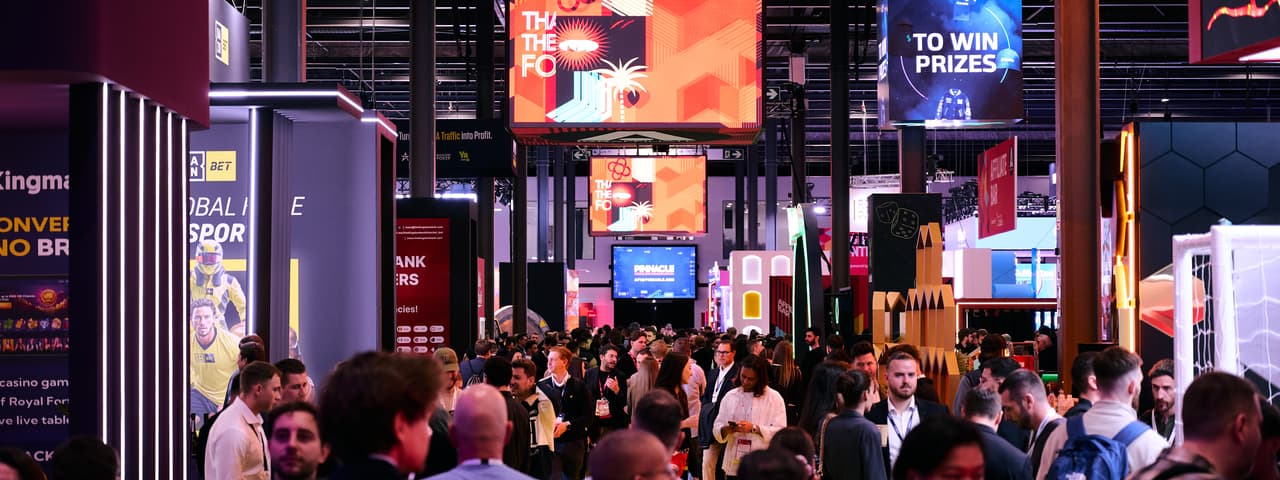
Discussions held on the conference floor at iGB Affiliate Barcelona last month will determine the direction of our industry over the next year and beyond, says Alina Famenok. She takes a look at what talking points are worth keeping an eye on.
At iGB Affiliate Barcelona 2026, I spoke with a wide range of people across the industry, including operators, affiliates, product teams and partners. Regardless of role or company size, most conversations eventually circled back to the same question: What are we really heading into in 2026?
Some discussed regulation, while others focused on traffic, shrinking margins, or intensifying competition. But beneath all of that was the same underlying feeling that approaches that had worked no longer delivered the same results.
On the way home, I pulled my notes together and identified five shifts that will shape the industry in 2026. I’ve deliberately structured them in the order they appear here because this is no longer a list of isolated trends but a logical chain, from market conditions to business foundations to how users ultimately decide whom they trust.
Regulation is no longer a threat
For many in iGaming, especially affiliates, the word regulation still triggers discomfort. Over the years, the industry has repeatedly had to adapt to regulatory changes, seeking workarounds and making difficult choices. Some see regulation as an opportunity, prepare early, and benefit from first-mover advantages. Others choose to exit rather than rebuild their processes.
Companies with flexible, scalable infrastructure are consistently one step ahead, especially in competitive, licensed regions
But in 2026, the shift isn’t regulation itself. Regulation has been present for a long time, like heavy, unavoidable smog that everyone feels, even if they pretend it’s not there. The real shift is that the industry is finally accepting it as the baseline. The focus is moving from avoiding regulation to working within it, building compliant processes, designing for transparency and finding competitive advantages inside the rules.
More markets are moving into regulated territory. Requirements are becoming stricter and clearer. Companies with flexible, scalable infrastructure are consistently one step ahead, especially in competitive, licensed regions. These are the affiliates and operators that platforms, partners and investors want to work with - namely those that prioritise sustainability over short-term loopholes.
From a background task to a growth factor
For years, infrastructure was treated as secondary or ignored entirely. The logic was to prioritise traffic, offers and marketing, thinking infrastructure could be “fixed later.” That approach no longer works. In 2026, the focus is less on launching itself and more on how you’ve launched and whether your setup allows you to stay flexible, adapt quickly and scale under pressure.
The debate continues: build customs from scratch or rely on existing solutions. Custom development sounds appealing. But in practice, it often becomes a black hole, with years of development, growing budgets, endless revisions and no real “final version.”
Off-the-shelf solutions may not add headline valuation on their own, but they do what matters most: they work reliably, scale faster and don’t break the business with every update. In 2026, this becomes critical. Winning companies are those that can scale quickly, update products without friction and meet white-market requirements immediately, not “eventually.”
Off-the-shelf solutions may not add headline valuation on their own, but they do what matters most: they work reliably, scale faster and don’t break the business with every update
Under increasing regulatory pressure and complex integrations, infrastructure is no longer an internal concern. It directly impacts trust with payment providers, platforms, partners and investors. Without strong infrastructure, growth stalls. With the right foundation, growth becomes faster, calmer, and far more predictable.
Personalisation as a new interaction logic
Not long ago, personalisation meant simple techniques such as a first name in an email, GEO-based banners and basic CRM scenarios - and that was sufficient. Welcome messages, post-deposit emails and “we miss you” reminders genuinely worked. Today, it’s almost hard to believe that birthday emails or “you didn’t finish registration” messages once moved the needle.
They’re still useful, but let’s be honest, they’ve become hygiene rather than personalisation. The market evolved, and so did users. With endless offers and choices, players became more selective and rightly so. In 2026, personalisation centres on the individual, shaped by behaviour, motivation, context, and expectations. It’s about creating an intuitive, personal experience at every stage, from the first screen and UX to game design, visuals, content and tone.
Strong operators no longer work with “audiences”; they work with behavioural patterns. Offers adapt to moments, habits and intent
Players expect to be understood instantly. If a brand doesn’t speak to them personally, it simply won’t hold their attention. Strong operators no longer work with “audiences”; they work with behavioural patterns. Offers adapt to moments, habits and intent. Strong affiliates do the same. They stop sending everyone everywhere and instead build flows tailored to specific user states: content, creatives, entry points and offers.
In short, personalisation needs to operate as a dynamic system based on genuine understanding.
Content now sits inside the product experience
The market has largely accepted one reality: generic landing pages and templated marketing no longer perform the way they used to. This shift didn’t happen overnight. But by 2026, it’s firmly established that users respond less to the offer itself and more to how it’s presented.
Tone of voice, visuals, storytelling and depth of localisation now determine whether a user stays or scrolls past. This is especially visible in competitive GEOs, where users are tired of identical websites and interchangeable “best offers.”
Content has become part of the product experience, shaping how users understand, choose, and stay. Through content, users form initial trust, assess relevance and perceive how a brand treats them.
Great content builds trust by showing why you’re credible, not just what you sell. In 2026, winning comes down to speaking the user’s language, both literally and emotionally, rather than relying on the most aggressive offer. This entails understanding the local context, culture, motivations, fears and expectations.
For affiliates, this means a shift from “send traffic and check conversion” to building real content equity. Media platforms, honest reviews, clear positioning and authentic voice become core assets.
Behind every strategy decision
In 2026, being just another player in the market is no longer enough. Products have levelled out with similar features, familiar UX and marginal differences in bonus mechanics. Solid products and fast support are baseline expectations.
But differentiation comes from the story a company consistently tells. Today’s brand is defined by character, tone, honesty and strategy, reflected across everything from content to partnerships.
Users are more selective. They instantly recognise what feels real and what feels like surface-level branding. Without a clear sense of “I know who you are,” users simply move on. Brand isn’t something you design once. It’s something you communicate continuously, consciously and consistently. When everything else looks the same, perception becomes the deciding factor.
In 2026, companies increasingly invest in:
- Creative as a product, not decoration.
- Narrative over promotion.
- Visible leadership, community, and presence.
Users don’t come only for offers; they come for connection and for the feeling that a brand understands them. Brand responsibility no longer rests with operators alone.
Affiliates are increasingly part of the brand system. Often, they are the first touchpoint shaping context, expectations and trust. That’s why affiliates in 2026 will need to rethink their approach: moving away from dry funnels and focusing instead on who they speak to, how they speak, and what they represent.
We all need to build partnerships not just through links, but through shared meaning.
Final thoughts
Combined, these shifts make it clear that 2026 is not about a single tactic or a new silver bullet, but about maturity.
Regulation defines the framework. Infrastructure determines whether you can operate within it. Personalisation and content decide whether users listen. A brand is what remains when everything else evens out.
This isn’t about being the loudest or the most aggressive, but rather building systematically, communicating honestly, and thinking beyond the next update toward what their business should look like years from now.
Alina
Famenok
is an affiliate leader who served as CEO of Already Media for five-and-a-half years, helping the company scale into one of the fastest-growing brands in the industry.